Different asset classes respond differently to economic conditions, inflation, interest rate movements, geopolitical events, and investor sentiment.
Equities tend to perform well during periods of economic optimism and earnings growth. Gold often acts as a defensive asset during uncertainty. Debt instruments usually provide stability and lower volatility, while cash preserves liquidity and reduces overall portfolio fluctuations.
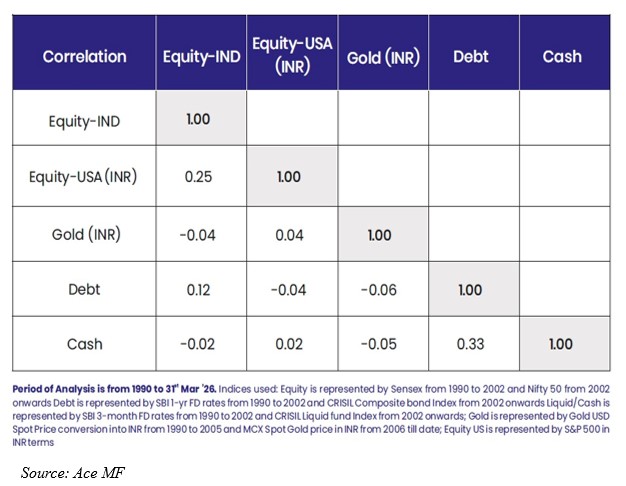
Historical data shows that these asset classes have generally maintained relatively low correlations with one another. Gold, for example, has at times shown near-zero or slightly negative correlation with Indian equities. Debt too has behaved differently from equities during several market cycles.
This difference in behaviour is what creates the real benefit of diversification. When one asset class struggles, another may remain stable or even perform positively, helping smooth overall portfolio returns.
One of the biggest misconceptions in investing is that diversification significantly reduces long-term returns. In reality, diversified portfolios have often managed to deliver returns relatively close to equity-only portfolios while taking lower risk meaningfully.
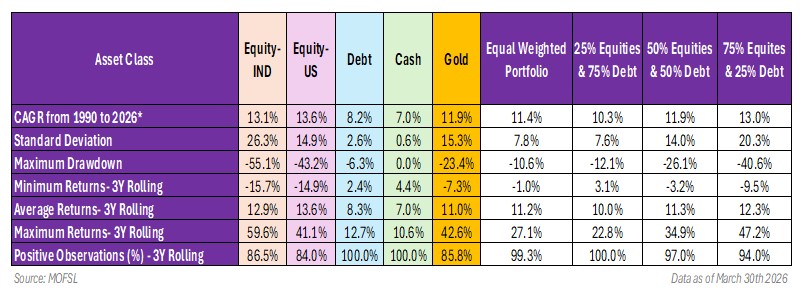
Pure equity portfolios have historically generated strong long-term returns, but they have also experienced sharp volatility and deep drawdowns during market corrections. Large temporary declines can become emotionally difficult for investors to endure, especially during periods of panic or uncertainty.
Adding debt, gold, or cash to a portfolio changes this dynamic considerably.
For instance, balanced portfolios combining equities with debt and other assets have historically achieved returns only slightly lower than pure equity portfolios, while experiencing substantially lower standard deviation and significantly smaller draw-downs. Even equal-weighted portfolios across multiple asset classes have demonstrated relatively stable long-term performance despite lower overall volatility.
This matters because investing success is not determined only by returns on paper. It also depends on an investor’s ability to stay invested through difficult periods. Lower volatility and smaller drawdowns often make it easier for investors to remain disciplined and avoid emotionally driven decisions.
While diversification is important, simply creating one allocation and ignoring it forever may not always be sufficient.
Different market environments reward different portfolio structures. Equity-heavy portfolios tend to outperform during strong bull markets, while portfolios with higher exposure to gold or debt often provide better resilience during uncertain or volatile periods.
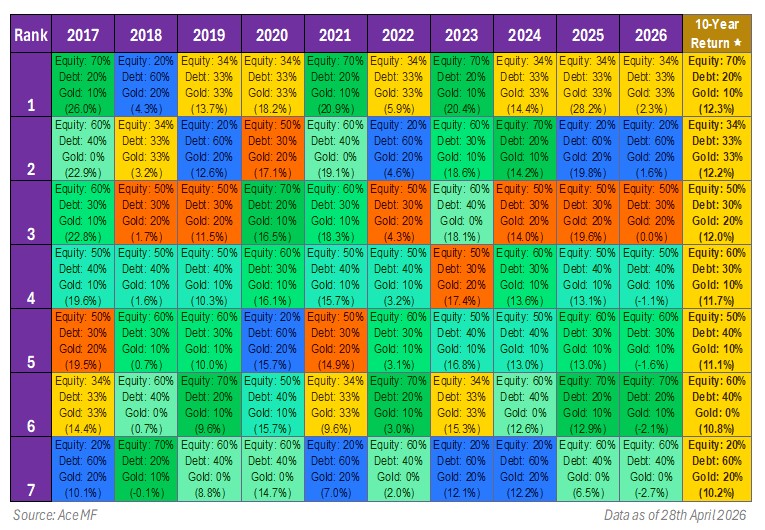
Recent years have clearly demonstrated this shift in leadership between asset classes. In some periods, aggressive equity allocations generated superior returns. In others, portfolios containing gold exposure delivered stronger relative performance and helped reduce downside pressure.
This highlights an important reality that asset allocation is dynamic.

Sri Subhash Yerneni
Sri Subhash is an astute banking and finance professional with 14 years of real-world experience in wealth management, advisory of financial instruments such as mutual funds-equity and debt-alternate investment funds ( AIF)-structure and offshore products-private equity-venture capital/debt-bonds and MLDs-priority banking-cash management-team management-and working with various cultures in various nations.